Instalação "De Onde Não Se Vê", no MAC Niterói
A reedição da instalação de Pedro Varella/gru.a leva o visitante à cobertura do museu de Oscar Niemeyer.
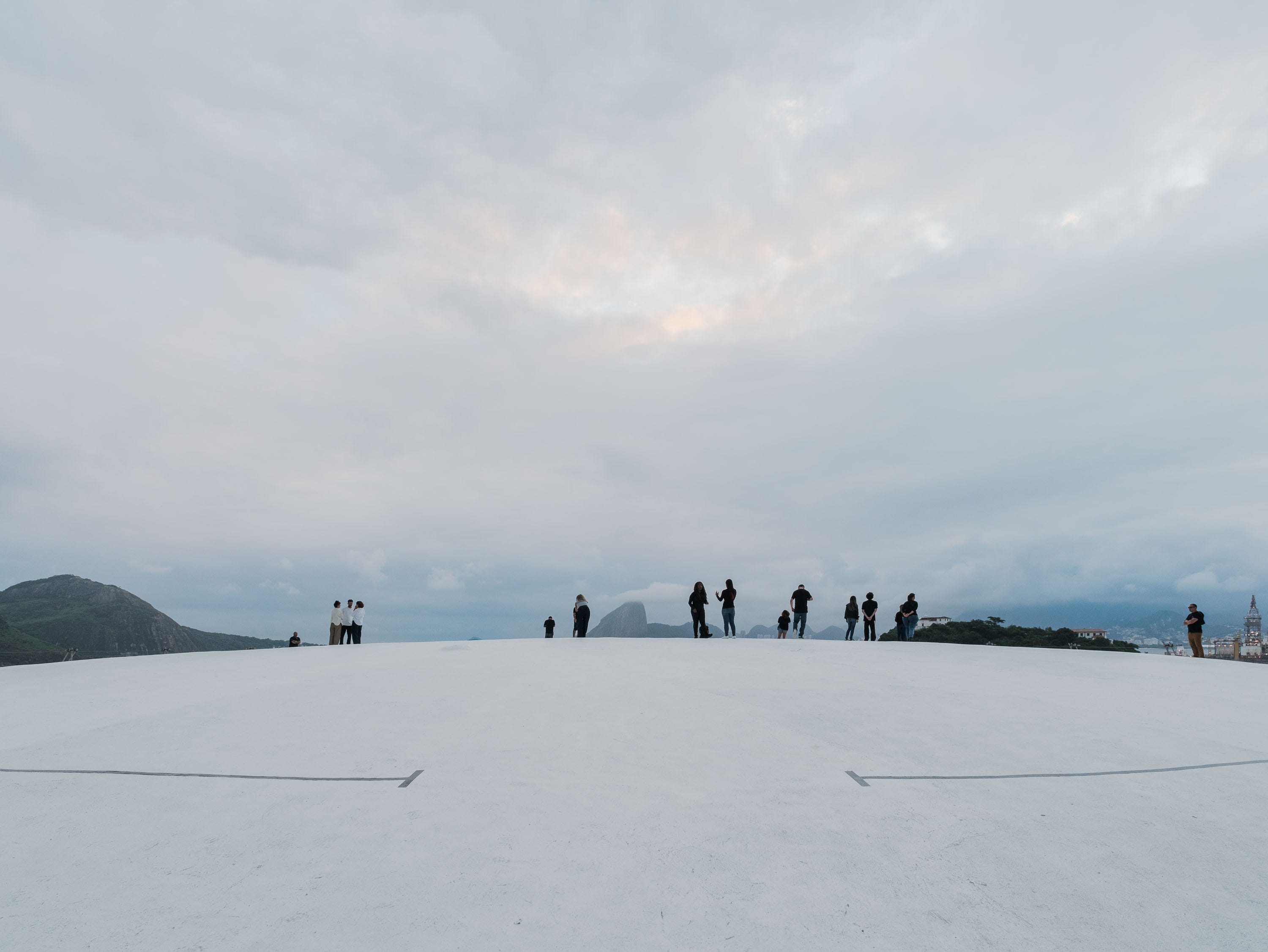
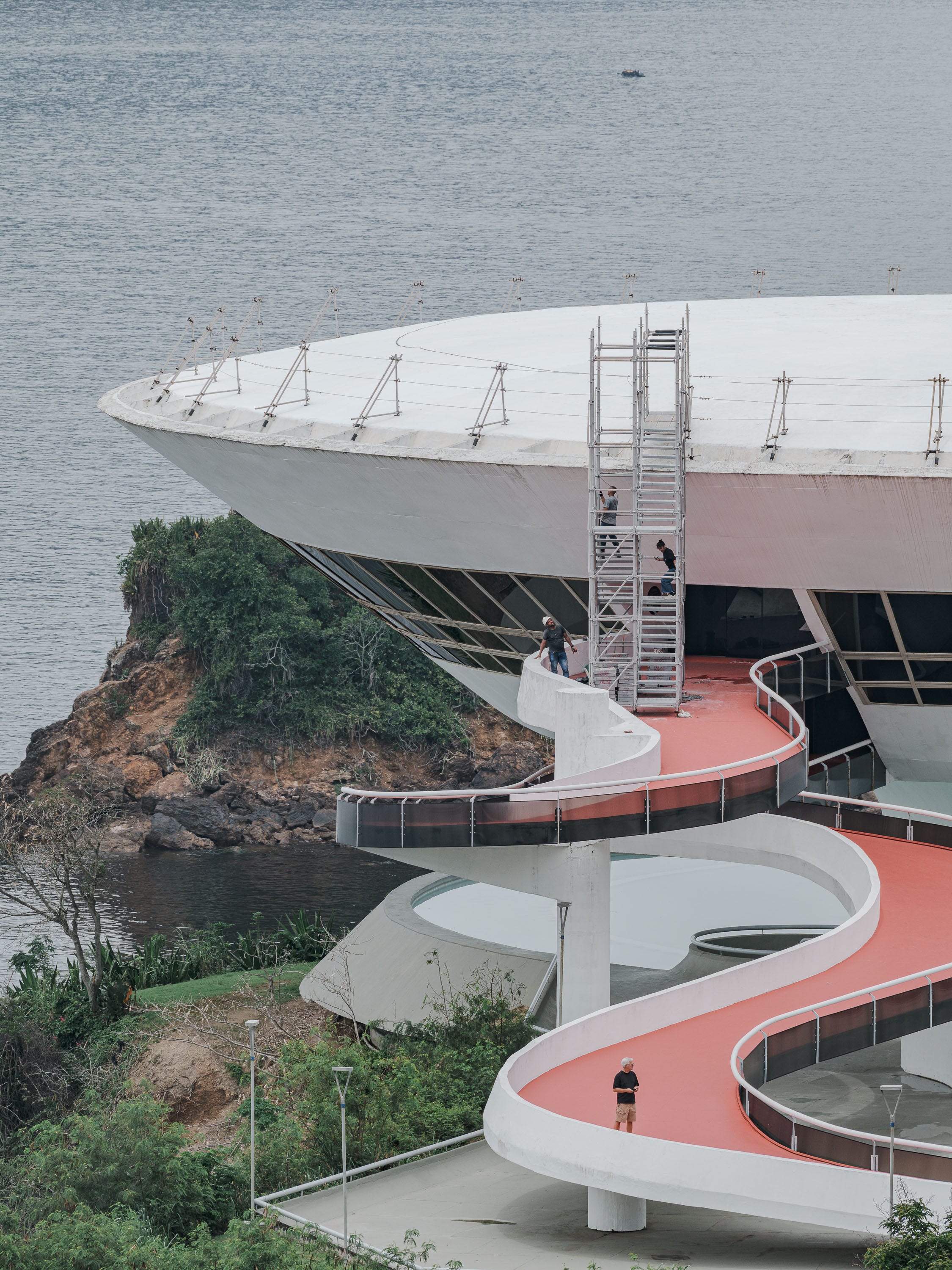
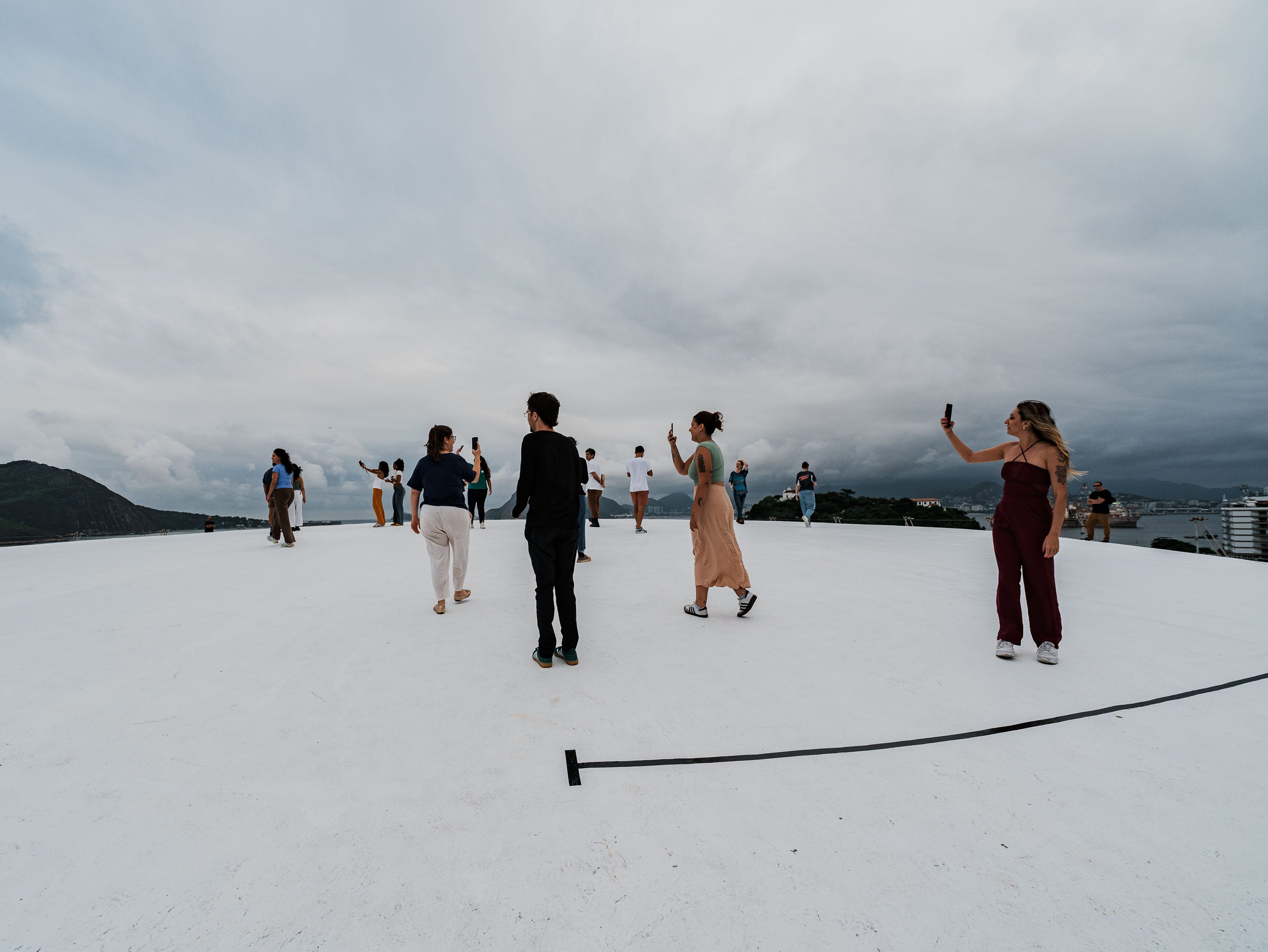
Apresentada originalmente em 2017, quando venceu o 3º Prêmio Reynaldo Roels Jr. — parceria entre o MAC e a Escola de Artes Visuais do Parque Lage —, a instalação De onde não se vê retorna nove anos depois ao Museu de Arte Contemporânea de Niterói. Desenvolvida pelo escritório Gru.a, do qual Pedro Varella é sócio-fundador, a obra volta ao mesmo espaço com a proposta de levar os visitantes a um lugar normalmente inacessível: o teto do museu.
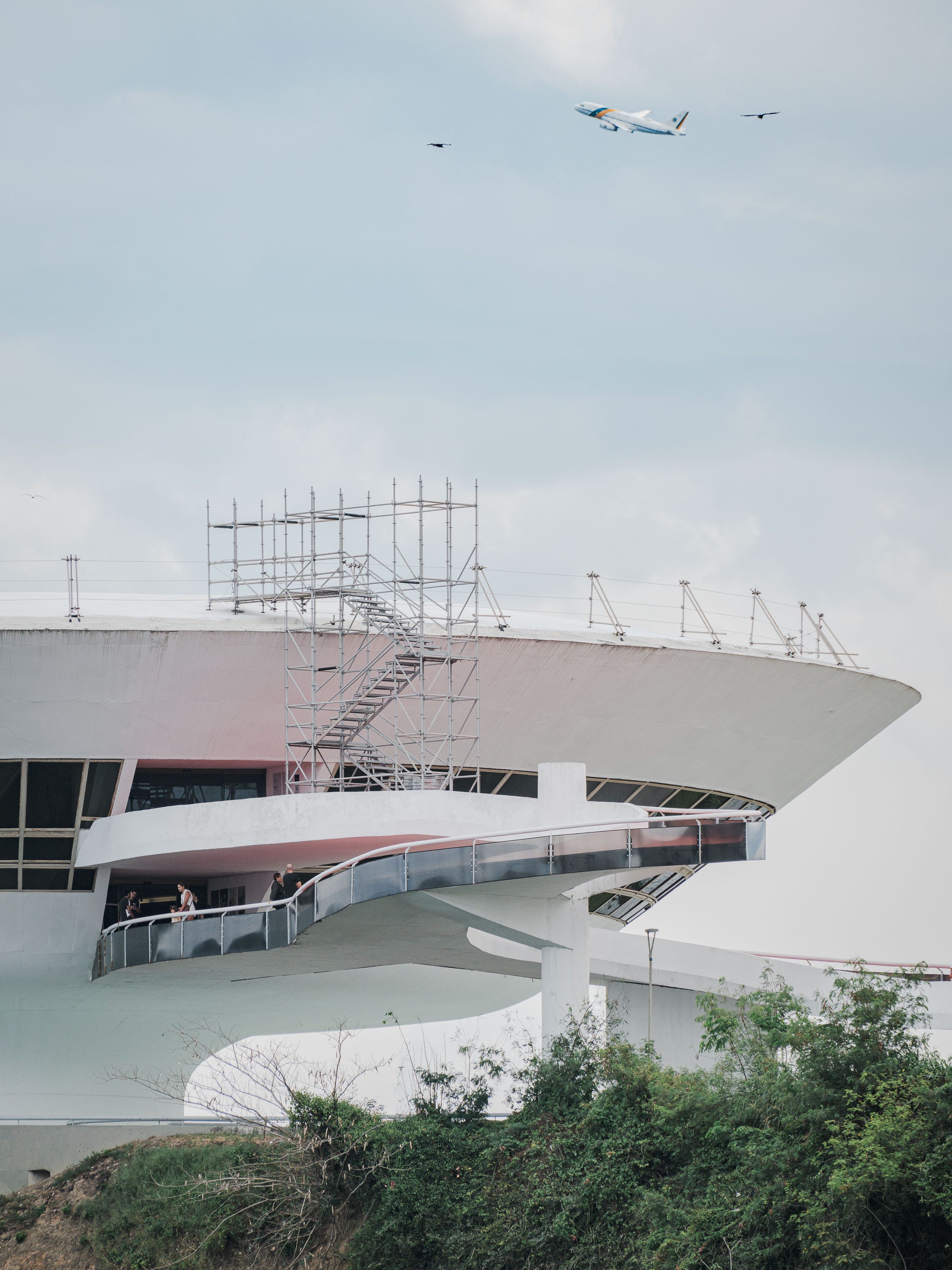
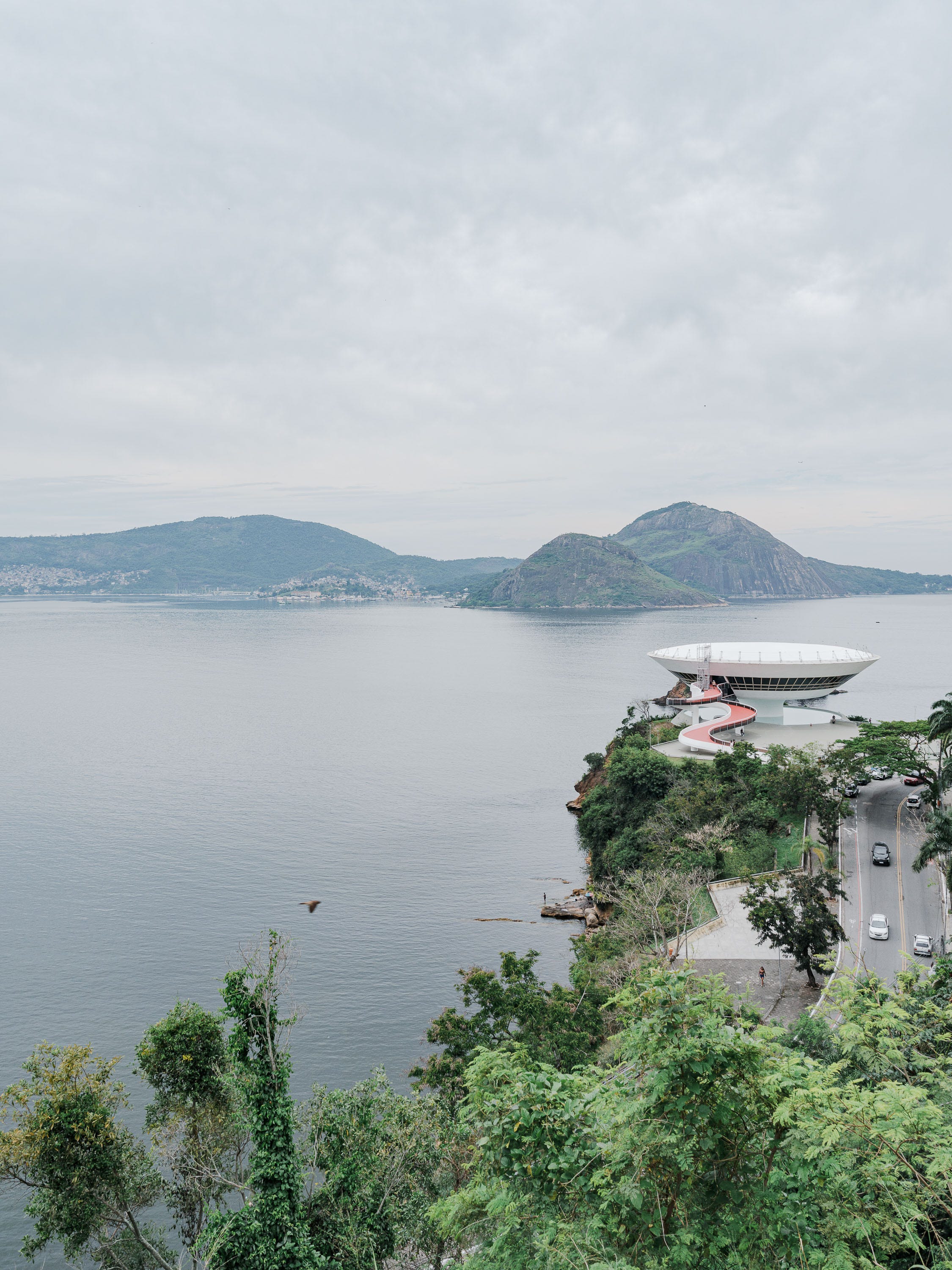
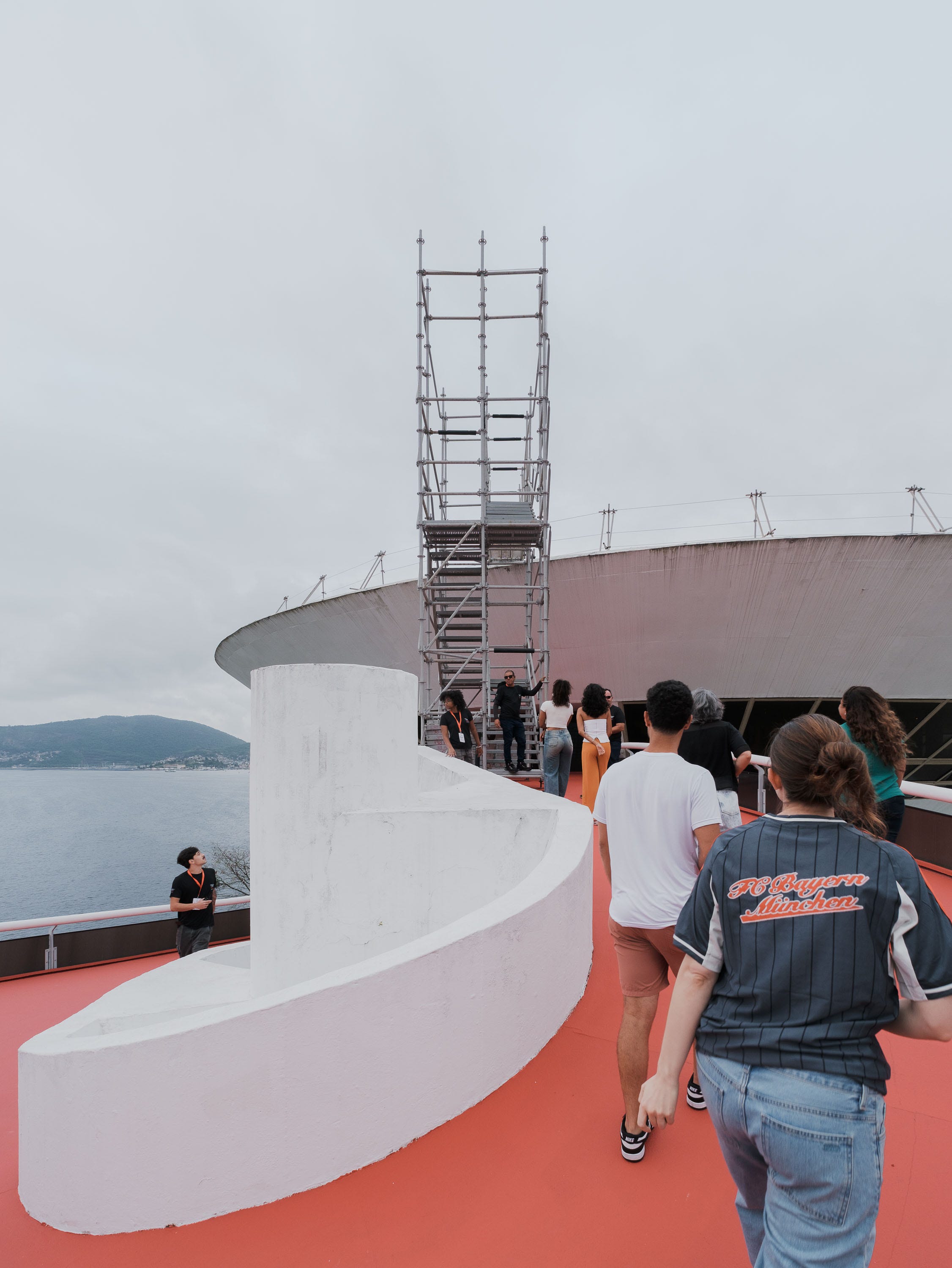
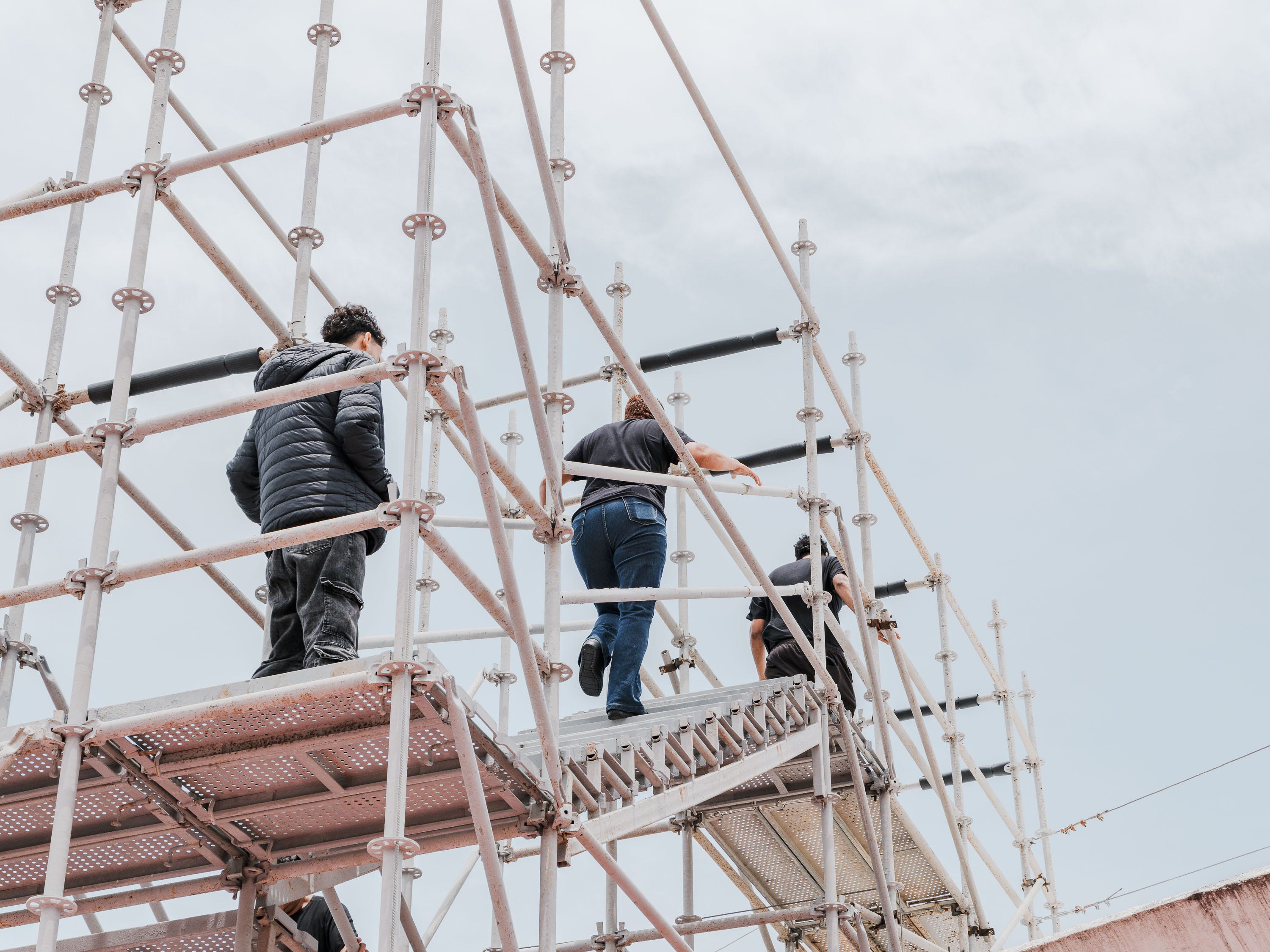
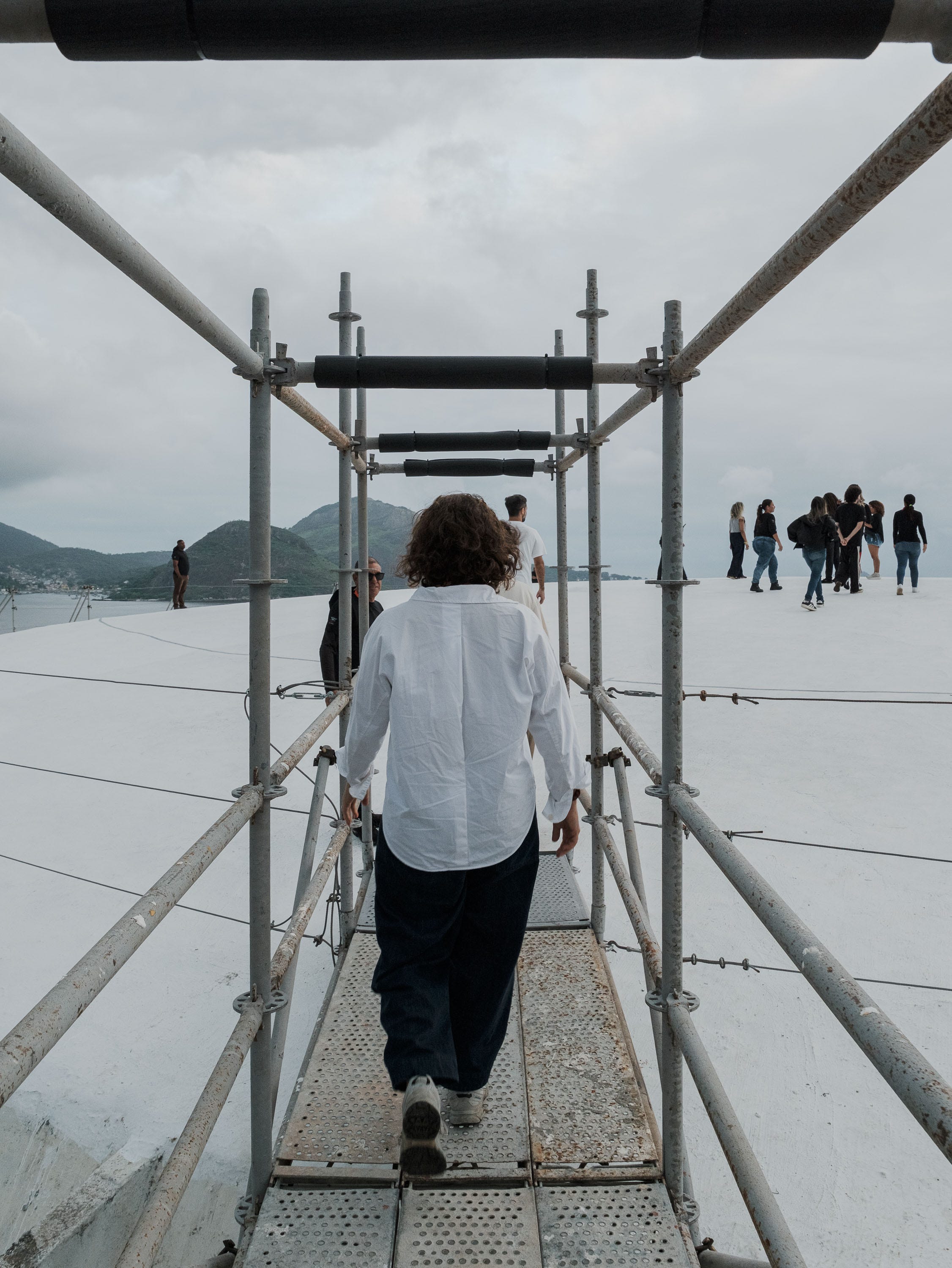
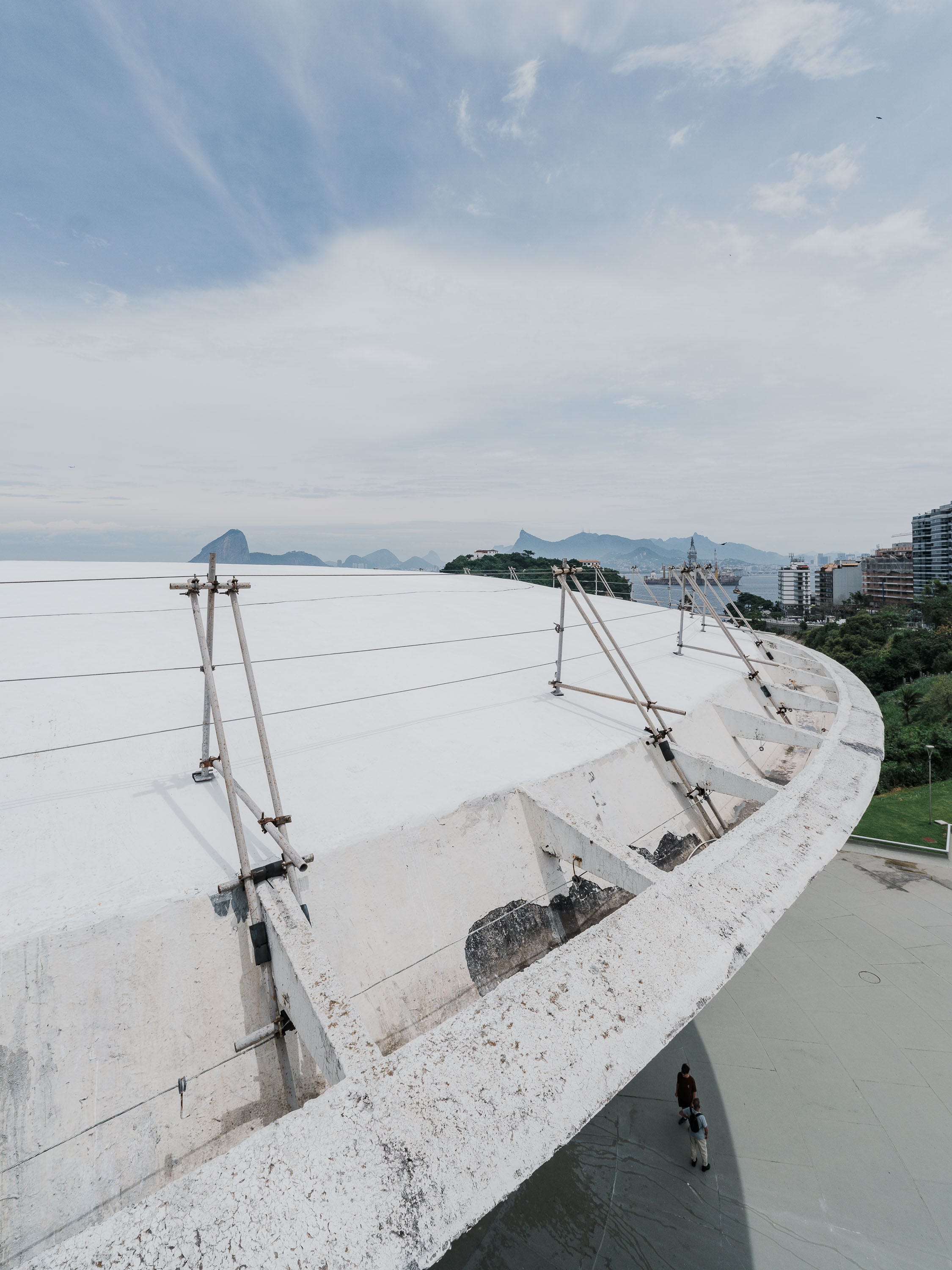
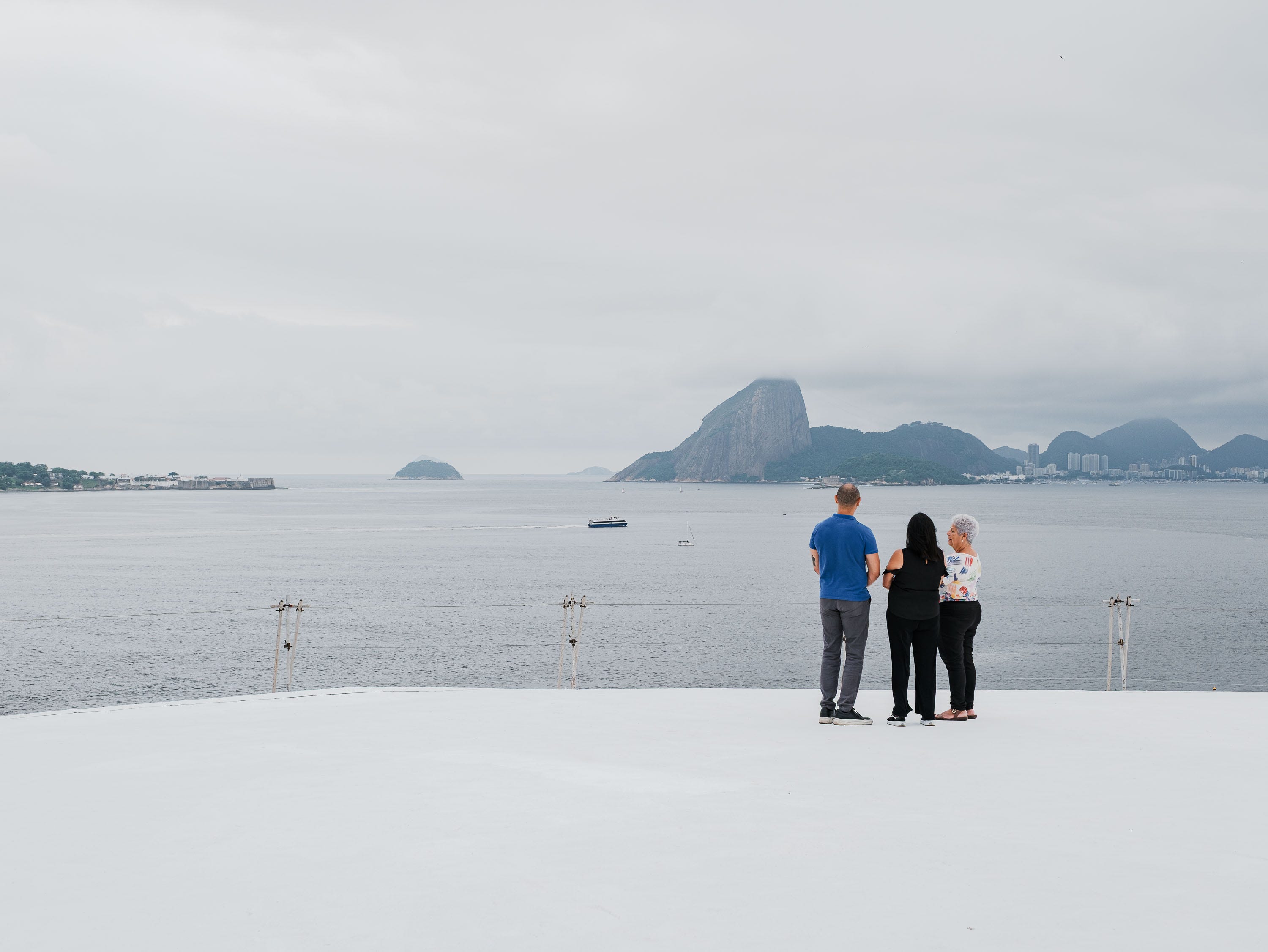
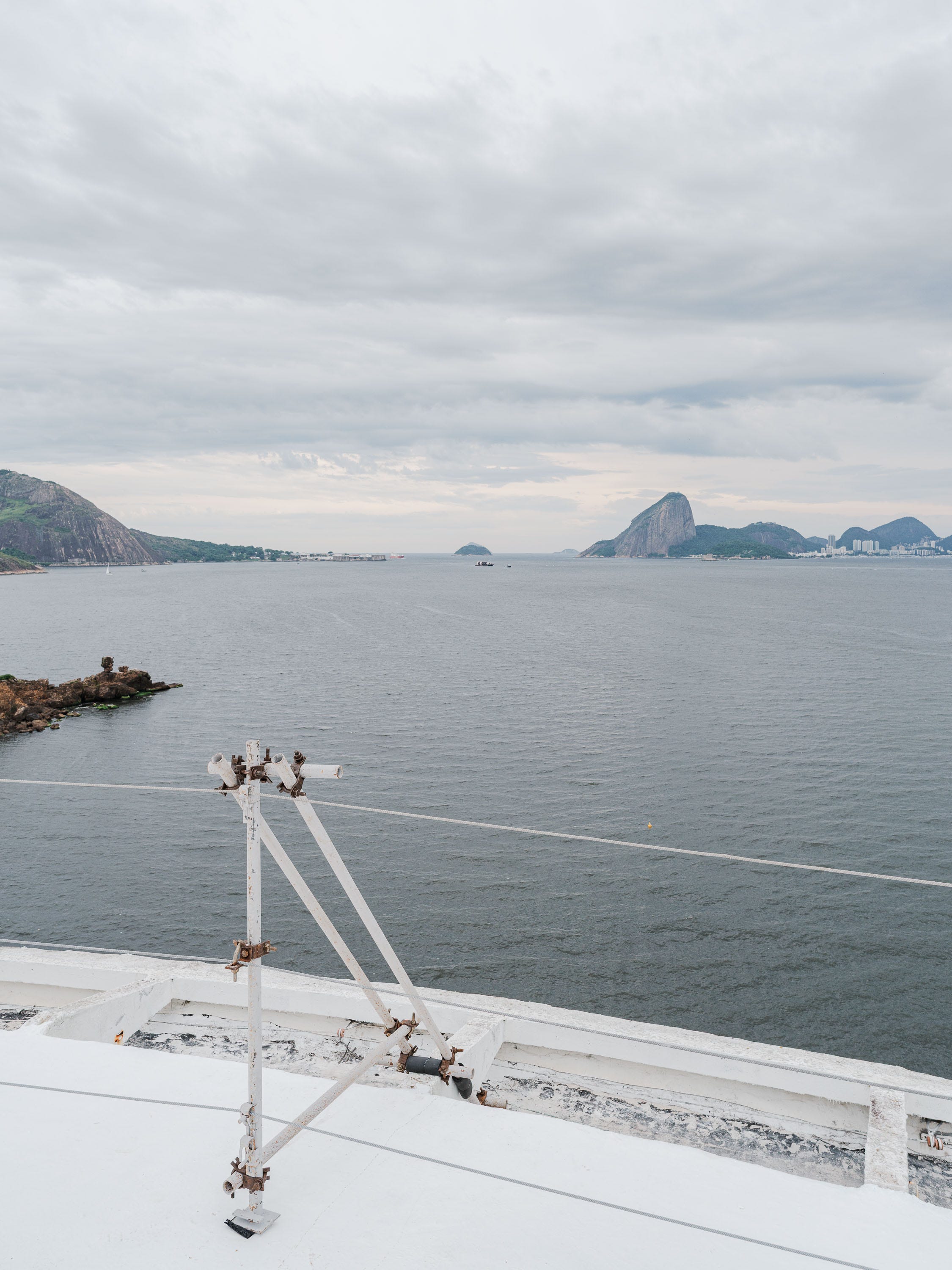
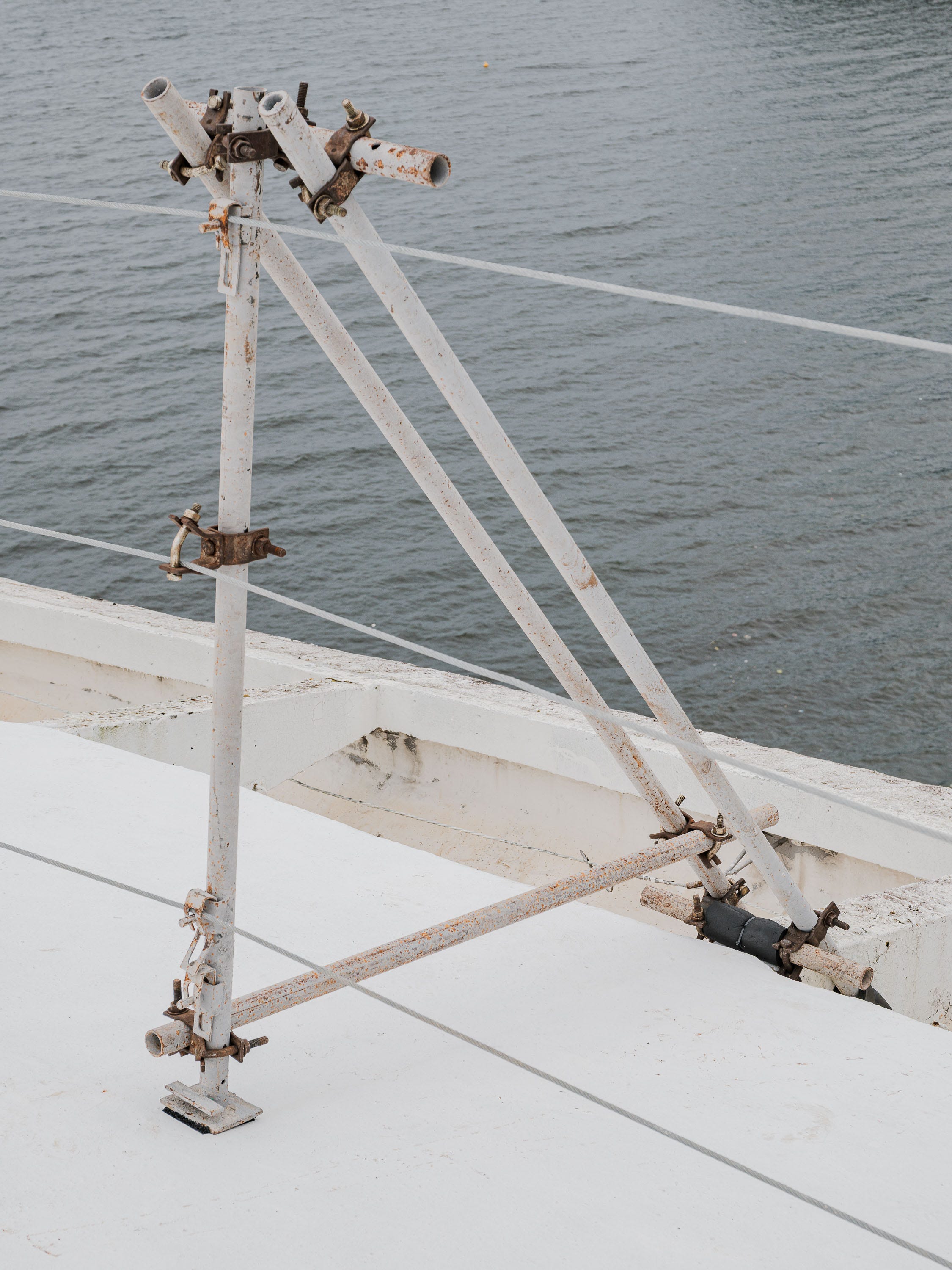
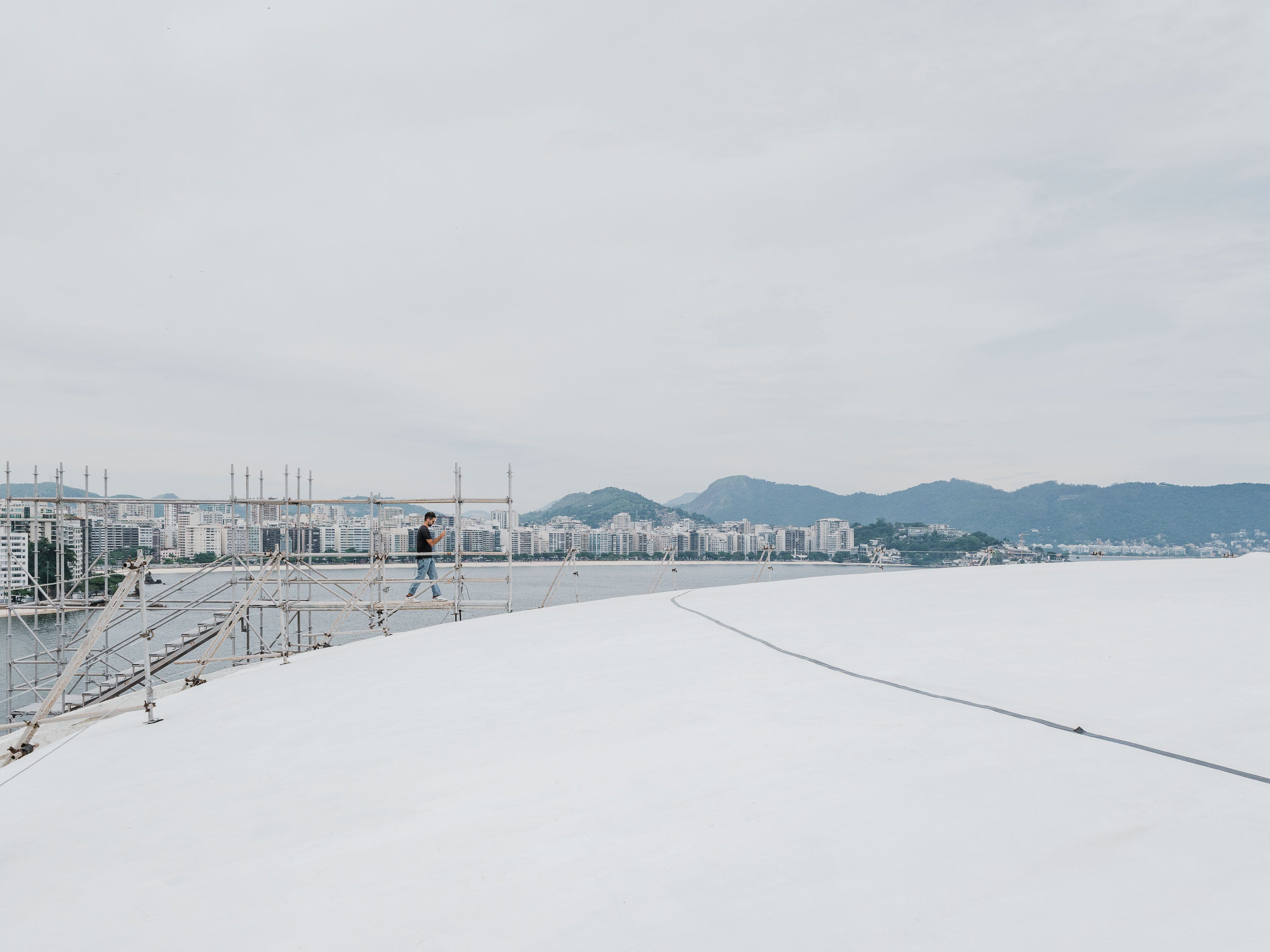
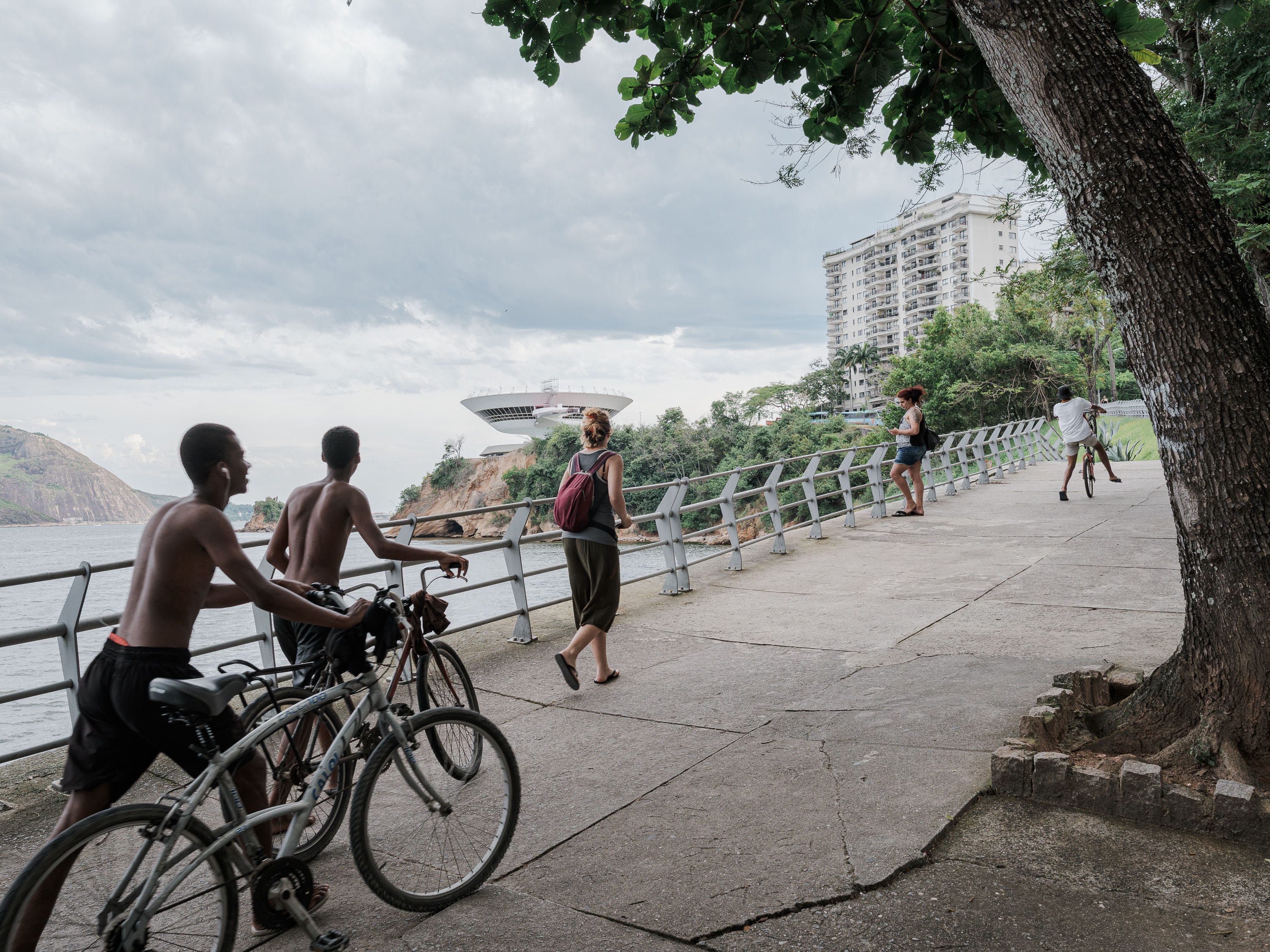
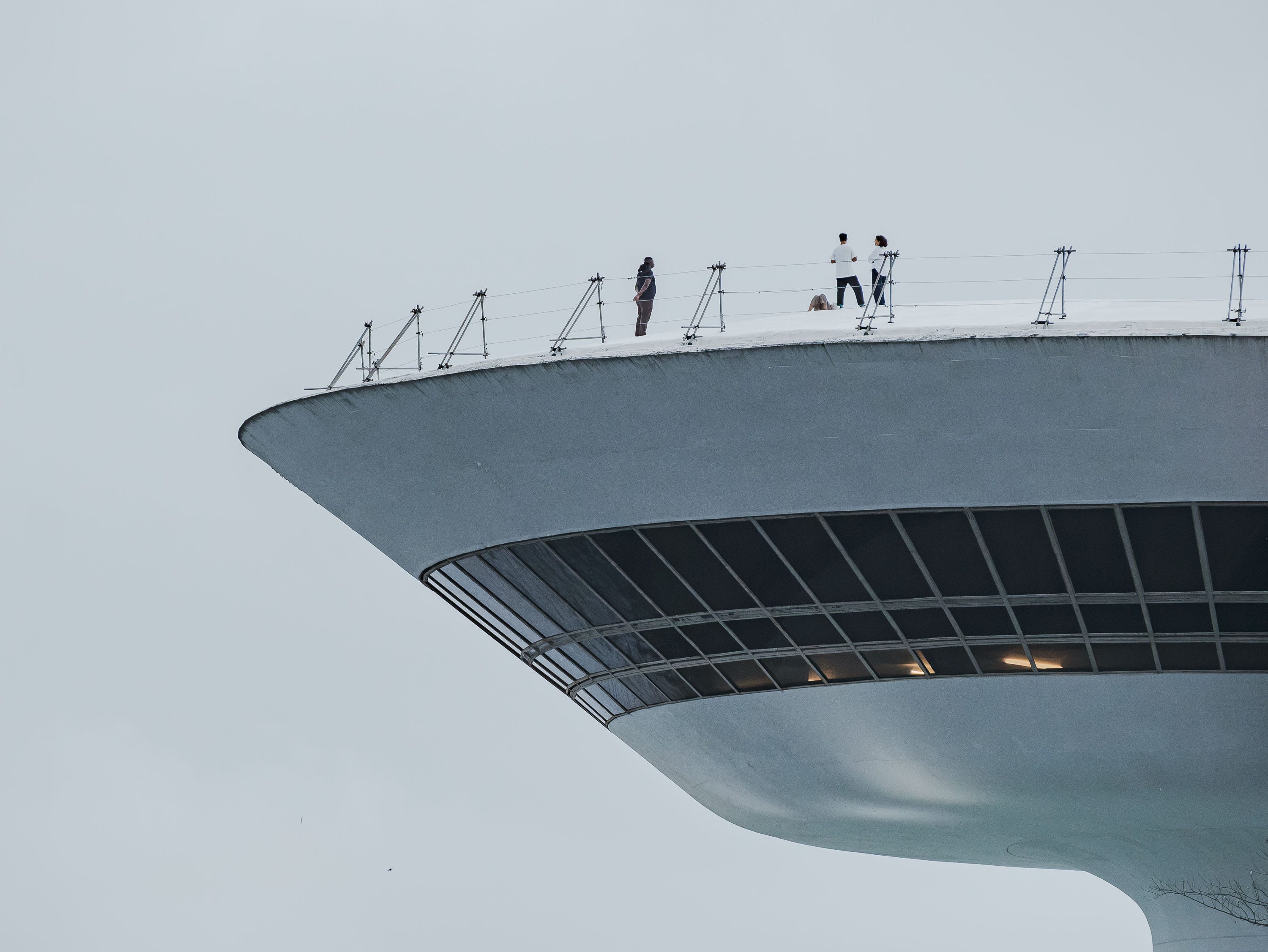
No edifício de Oscar Niemeyer, os deslocamentos são coreografados passo a passo: a chegada pela praça seca, a subida pela rampa sinuosa e, por fim, a Baía de Guanabara rigorosamente enquadrada pelas bordas da estrutura. Tudo ali afirma o museu como um objeto autônomo e absoluto na paisagem. A intervenção do Gru.a tensiona essa lógica ao dar continuidade ao movimento ascendente da rampa externa por meio de uma escada de estrutura tubular, conduzindo o público até a laje de cobertura. No perímetro, o guarda-corpo metálico é estabilizado apenas por um sistema de cabos tensionados que abraça o edifício sem perfurar ou interferir em sua superfície. Lá em cima, cumpre-se o paradoxo anunciado pelo título: estar no topo desse marco arquitetônico e, simultaneamente, perder de vista a sua imagem.
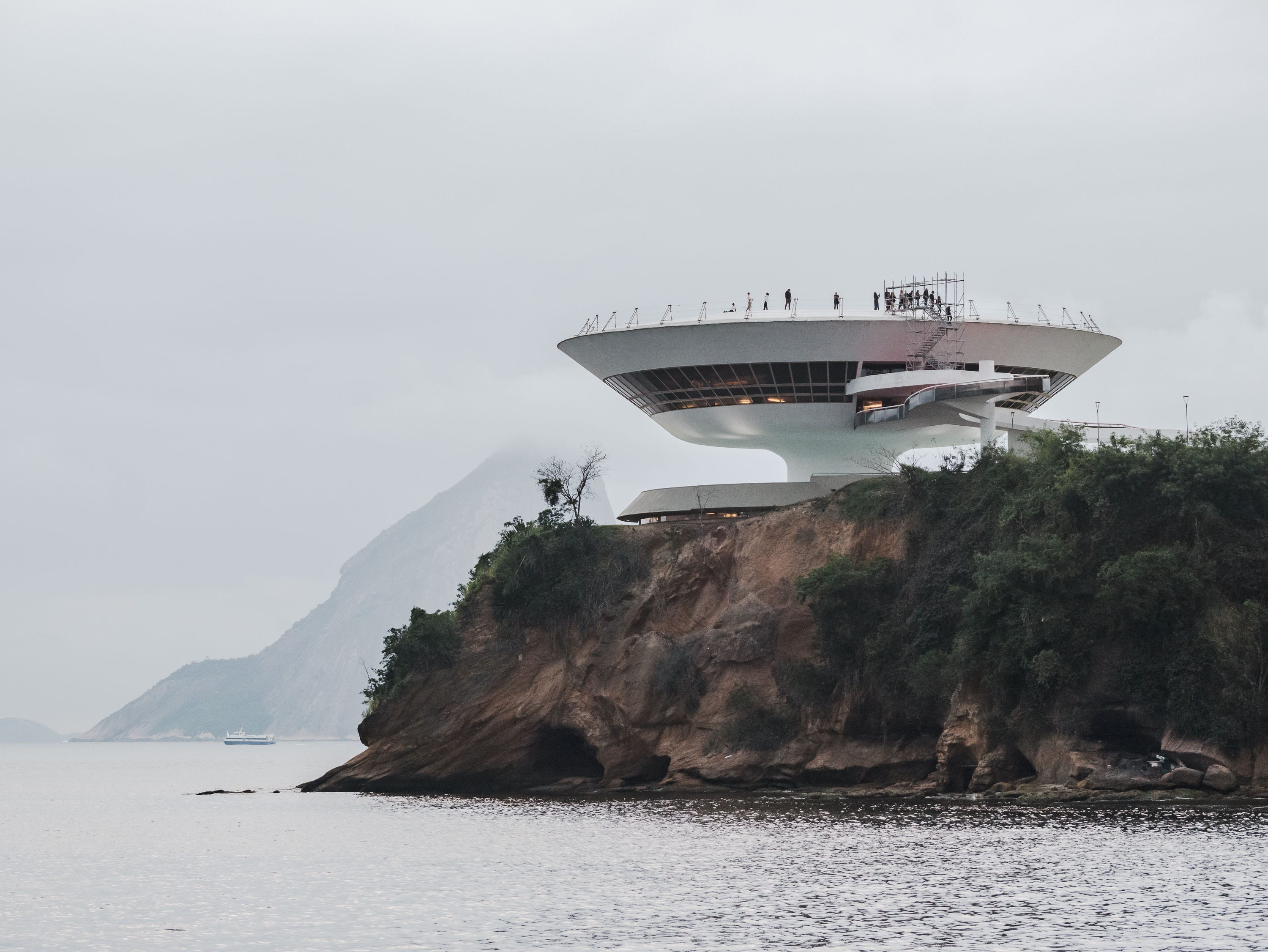
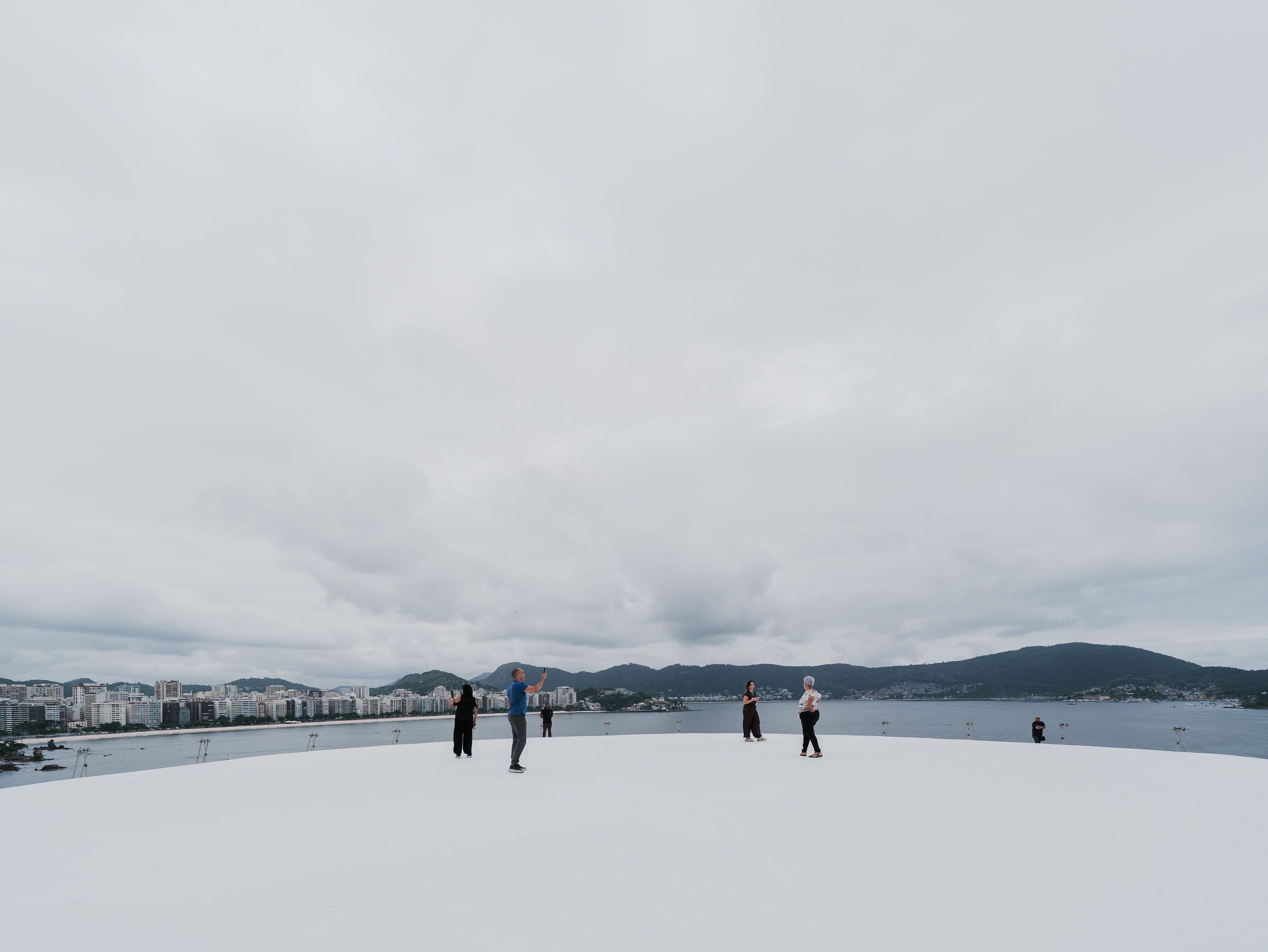
Foram dois dias de diálogos fotográficos entre arquitetura, paisagem e atmosfera, ambos sob um tempo fechado e muito nublado — algo que me persegue há meses pelo Brasil. Longe do sol forte que costuma recortar as curvas de concreto contra os azuis do céu e da baía, encontrei uma condição em que o branco denso das nuvens confunde-se com o branco da arquitetura do museu, apagando os limites precisos entre o edifício e entorno.
Fotografar sob essas condições — acolhendo os ruídos do clima e aquilo que está fora de controle — exige circular repetidas vezes pela estrutura e redondezas até exaurir as possibilidades que aquela luz difusa oferece. Com a superfície do MAC fundida às nuvens, o volume do museu parece se dissolver no ar, levando ao extremo, na própria imagem, o desaparecimento proposto pela instalação. Neste contexto, restam a trama gráfica dos tubos metálicos, a silhueta esmaecida dos morros através da bruma e a escala humana suspensa sobre a Guanabara.
Obrigado por chegar até aqui! Um dos desafios desta newsletter é alcançar novos leitores sem depender dos algoritmos. Se você gostou do conteúdo, compartilhe o link com amigos ou em grupos de WhatsApp. E, se quiser trocar uma ideia, é só responder a este e-mail — vou adorar receber sua mensagem!
In English
Originally presented in 2017, when it won the 3rd Reynaldo Roels Jr. Award—a partnership between MAC and the Parque Lage School of Visual Arts—the installation De onde não se vê (From where one cannot see) returns nine years later to the Niterói Contemporary Art Museum. Developed by the architecture practice Gru.a, co-founded by Pedro Varella, the work comes back to the same site with a proposal to lead visitors to an ordinarily inaccessible place: the roof of the museum.
In Oscar Niemeyer’s building, movement is choreographed step by step: the arrival across the open plaza, the ascent up the winding ramp, and, finally, Guanabara Bay strictly framed by the edges of the structure. Everything there asserts the museum as an autonomous, absolute object within the landscape. Gru.a’s intervention challenges this logic by extending the upward motion of the exterior ramp via a tubular steel staircase, guiding the public onto the roof slab. Along the perimeter, the metal guardrail is stabilized solely by a system of tensioned cables that embraces the building without drilling into or altering its surface. Up on top, the paradox announced by the title is fulfilled: standing atop this architectural landmark while simultaneously losing sight of its image.
There were two days of photographic dialogue between architecture, landscape, and atmosphere, both under overcast, heavily clouded skies—something that has been following me across Brazil for months. Far from the harsh sunlight that usually carves the concrete curves against the blues of the sky and the bay, I encountered a condition in which the dense white of the clouds merges with the white of the museum’s architecture, erasing the sharp boundaries between the building and its surroundings.
Photographing under these conditions—embracing the noise of the weather and whatever lies beyond control—demands circling the structure and its surroundings repeatedly until exhausting the possibilities offered by that diffuse light. With the surface of the MAC fused into the clouds, the museum’s volume seems to dissolve into thin air, pushing the disappearance proposed by the installation to an extreme within the image itself. In this context, what remains are the graphic grid of the metal tubes, the faded silhouette of the hills through the mist, and the human scale suspended above Guanabara Bay.